Your Year in Music Just Became Your Entire Personality — And You're Not Mad About It
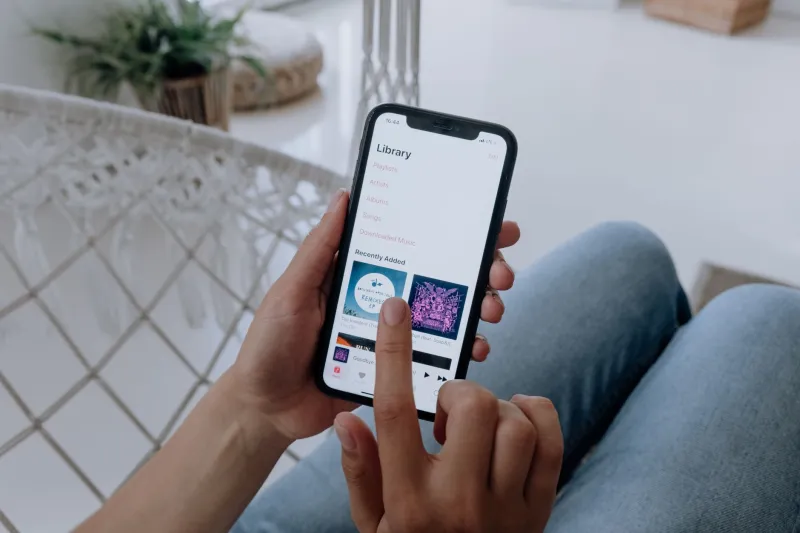
It happens like clockwork. Late November rolls around, the group chats start buzzing, and then — boom — your phone is flooded with colorful slides breaking down every song you've ever stress-listened to at 2 a.m. Spotify Wrapped has arrived, and somehow, for about 72 hours, it becomes the most important thing happening on the internet.
But here's the thing nobody's really talking about: we're not just sharing data. We're making a statement. And the pressure to have the right kind of music taste? That's more real than most of us want to admit.
When Listening Habits Became a Badge of Honor
There was a time when your music taste was just... yours. Maybe you had a CD collection or a carefully curated iTunes library that only your closest friends ever saw. Now? Your top artists are public content. People screenshot their results before they've even finished reading them, and the posts start flying before the algorithm even has a chance to breathe.
The shift is wild when you think about it. Streaming recaps — Spotify Wrapped, Apple Music Replay, YouTube Music's year-end roundup — turned passive listening into an active identity performance. Your top genre isn't just a preference anymore. It's a personality trait. A conversation starter. Sometimes even a dating app bio.
And social platforms absolutely love it. Every December, Wrapped in particular becomes one of the most organically viral moments of the year, with zero paid promotion. People want to share it. That's not an accident — it's a masterclass in turning user data into something emotionally meaningful.
The Acceptable Taste Problem
Okay, real talk: have you ever looked at your Wrapped results and felt a tiny flicker of... embarrassment? Maybe your number-one artist was a pop star you swore you only listened to "ironically." Maybe your top song was something deeply, aggressively mainstream and you'd been out here presenting yourself as an indie head all year.
That moment of hesitation — that's the acceptable taste problem in action.
Online communities have very strong, very loud opinions about what music is cool, credible, or culturally aware. Certain genres carry social capital. Others carry secondhand cringe. And even though music taste is genuinely subjective, the pressure to land on the "right" side of that line is surprisingly intense, especially for younger audiences who've grown up building their identities online.
Some people straight-up curate their public listening. They'll play certain artists on Spotify specifically because they want those names showing up in their Wrapped. Meanwhile, their actual, private listening — the stuff they stream on YouTube with no account logged in, or blast in the car alone — looks completely different. It's a split persona, and honestly? Most of us are doing some version of it.
The Private Playlist vs. The Public Feed
There's something kind of fascinating about the gap between what people listen to and what they'll admit to listening to. Pop psychology has a name for it — the social desirability bias — but online culture just calls it vibes maintenance.
Think about how many people have a secret playlist buried under seventeen layers of private settings. The one with the throwback aughts pop-punk, the guilty pleasure country anthems, the three-hour true crime podcast deep cut playlist they've never told anyone about. That's the real listening data. That's the stuff Wrapped could expose if you weren't careful.
And some people genuinely panic about it. There are Reddit threads, every single year, with people asking how to reset their Spotify listening history before Wrapped drops. That's not a small thing. That's people actively managing the gap between their authentic taste and their presented identity.
Why We Actually Love the Ritual Anyway
Here's the flip side, though: for all the pressure and performance, Wrapped season is also genuinely fun. Like, unironically, no-notes fun.
There's something that hits different about seeing your year reflected back at you through music. Songs carry memories in a way that almost nothing else does. Your top track might be tied to a road trip, a breakup, a random Tuesday that somehow felt important. Wrapped turns that into something you can hold and share, and that's actually kind of beautiful.
And the community angle is real. Comparing results with friends, finding out your roommate's top genre is "sleep," discovering that your coworker has been silently obsessed with the same niche artist as you — it sparks actual connection. For digital-native audiences especially, shared media taste is one of the primary ways people bond. Wrapped just makes that process visible and time-stamped.
So What Does Your Wrapped Actually Say About You?
Honestly? Probably less than you think — and more than you realize.
The numbers themselves are just data. But the way you engage with them, what you choose to share, what you quietly edit out, what you feel defensive about — that's where the real personality stuff lives. Your relationship to your own Wrapped is more revealing than the Wrapped itself.
If you're spending energy curating a listening persona for public consumption, it might be worth asking why. Whose approval are you actually after? And what would it feel like to just... post the real results? The chaotic, contradictory, genuinely you results?
Spoiler: most people would probably relate more than you'd expect. Because behind every polished music identity is someone who has also, at some point, had a deeply embarrassing artist in their top five.
You're not alone. You just can't see everyone else's private playlists.