The Secret Account Is the Real One: What Your Finsta Says About Who You Actually Are
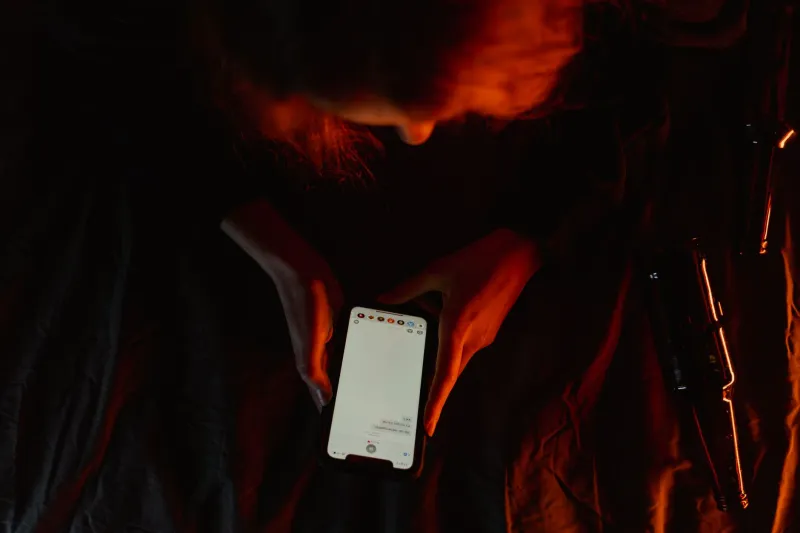
There's a good chance you have one. Maybe you call it a spam account. Maybe it's just "the private one." You've got maybe 40 followers — your actual friends, a cousin you trust, and that one person from summer camp you kept for reasons you can't fully explain. You post blurry selfies there. Unhinged memes. The kind of 3 a.m. thoughts that would absolutely tank your main account's aesthetic.
And somehow? That account feels more like you than anything you've ever posted publicly.
Welcome to the finsta era — and it's not going anywhere.
What Even Is a Finsta at This Point?
The term "finsta" started as a portmanteau of "fake Instagram" — a secondary account where people could post without the pressure of performing for a broad audience. But calling it "fake" has always been a little ironic, hasn't it? Because if your main account is carefully lit, strategically captioned, and curated to project a specific version of yourself, which one is actually the performance?
The finsta concept has expanded way beyond Instagram. People are doing the same thing on TikTok with locked accounts, on Twitter/X with alt handles, on Tumblr with side blogs that their coworkers will never find. The platform changes. The impulse doesn't. There's a version of you that exists for an audience, and a version that exists for you — and increasingly, those two things don't live in the same place.
The Main Character Problem
Here's the thing about having a polished main account in 2025: it's exhausting in a way that's hard to explain to anyone who isn't living it. Your feed isn't just photos — it's a brand. It's a narrative. It's a carefully managed impression that you're putting out into a world where anyone from your high school bully to a future employer might stumble across it.
Gen Z grew up watching influencers turn their entire personalities into content strategies, and a lot of them absorbed that lesson early. You don't just post — you build. You think about whether this photo fits the grid. You think about whether this caption sounds too try-hard or not try-hard enough. You think about the comment section before you even hit share.
That kind of constant self-monitoring has a psychological cost. Researchers studying social media use have pointed to what's sometimes called "self-presentation fatigue" — the mental drain that comes from managing how you appear to others over long periods of time. When every post is a decision about identity, it stops feeling like expression and starts feeling like labor.
The finsta is, in a lot of ways, a pressure valve.
Why the Messy Account Might Actually Be Better for You
There's something genuinely interesting happening psychologically when someone creates a low-stakes space for themselves online. Stripped of the performance pressure, people tend to communicate differently — more honestly, more emotionally, more weirdly. The finsta becomes a place where you can be confused about something without having to resolve it into a hot take. Where you can look rough in a photo without it meaning anything. Where you can just exist without it being content.
Psychologists who study authenticity in digital spaces have noted that the ability to compartmentalize — to have different modes of self-presentation for different contexts — isn't inherently unhealthy. In real life, we do this all the time. You're a different version of yourself at a job interview than you are at a sleepover. That's not being fake. That's being human.
The problem isn't having multiple accounts. The problem is when the curated version becomes so dominant that you lose access to the unfiltered one entirely — when the brand swallows the person.
The Community Angle: You're Not the Only One Living a Double Digital Life
One of the most quietly radical things about finsta culture is how it creates micro-communities. When your account is limited to 40 people who actually know you, every post becomes a conversation rather than a broadcast. People respond differently. The engagement is real instead of performative. Someone comments and it's not to boost their own visibility — it's because they actually have something to say to you.
This is part of why close-friends lists on Instagram, BeReal (during its moment), and locked TikToks keep gaining traction even as platforms push creators to go bigger and broader. There's an appetite for intimacy that mass-audience content just can't satisfy. People want to be seen by a few people who get it, not half-seen by thousands who don't.
At JuzyOnline, we talk a lot about community — real community, the kind that actually means something. And honestly? The finsta might be one of the most community-driven things happening on social media right now. It's people actively choosing depth over reach.
So Which Account Is Actually You?
Both, probably. That's the honest answer.
The version of you that wants to put your best face forward, that cares about how you're perceived, that has aesthetic preferences and wants to share them — that's real. The version of you that posts unedited and says the chaotic thing and doesn't worry about whether it fits a brand — that's also real.
The issue is when we start treating one as more legitimate than the other. The polished feed isn't a lie, but it's not the whole story. The finsta isn't your "true self" in some mystical sense — it's just you with fewer filters, literally and figuratively.
What might be worth asking yourself: Is your main account something you actually enjoy, or has it become a job you didn't sign up for? If posting publicly feels like a performance you're stuck in rather than something that gives you any satisfaction, that's worth paying attention to.
Because the goal was never to have the perfect grid. The goal was to connect with people. And sometimes the 40-follower account where you post blurry photos and unhinged memes is doing that better than anything else you've got going online.
Keep the finsta. It knows something your main account doesn't.