Why Your Discord Server Might Be the Most Real Place in Your Life Right Now

Picture the classic third place. The coffee shop where everyone knows your order. The record store where you could kill three hours on a Saturday. The mall food court where your whole friend group had a standing spot near the Sbarro. For decades, sociologists called these spaces "third places" — not home, not work or school, just somewhere you could exist alongside people who got you, with no agenda and no admission fee.
Now ask yourself: when's the last time you actually had one of those?
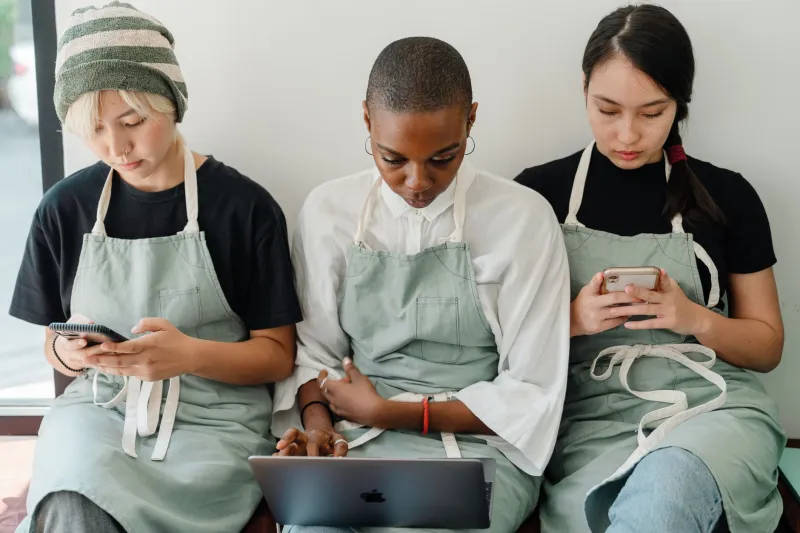
For a growing chunk of Gen Z and younger millennials, the honest answer is that their third place has a server icon and a list of channels sorted by topic. It's a Discord. A subreddit. A private group chat that's been going strong for three years. And the more you look at what's actually happening inside these spaces, the harder it is to dismiss them as a consolation prize.
The Third Place Problem Nobody's Talking About
Here's some context that doesn't get enough airtime: the physical third place in America has been disappearing for a while. Malls have been closing at a steady clip for years. Independent coffee shops in most mid-size cities are pricing out the people who used to live in them. Public parks are underfunded. Teen-friendly spaces that don't require spending money are increasingly rare, and the ones that exist can feel unwelcoming or unsafe depending on who you are and where you live.
Add to that the aftermath of the pandemic, which didn't just interrupt social habits — it restructured them. A lot of young people rebuilt their social lives online during lockdown and never fully migrated back. Not because they're antisocial, but because what they built online was, in a lot of ways, better.
Better how? Let's get specific.
What Actually Happens Inside These Servers
If you've never been part of a genuinely good Discord community, it's hard to explain what it feels like from the inside. It's not just chatting. It's having a place where you can drop a half-formed thought at 11pm and come back to find a whole conversation thread waiting for you. It's the running jokes that span months. It's the mutual support during finals week or a bad mental health day. It's the voice channels where people just hang out, doing their own thing, ambient-present with each other the way you used to be when you'd all just be in the same room watching TV.
Take Marcus, 22, from Columbus, Ohio, who's been part of the same gaming-adjacent Discord for three years. "These are legitimately some of my closest friends," he says. "We've done care packages when someone was going through it. We've celebrated each other's job stuff. One person in the server flew out to meet a few of us last summer. Like, this is real."
Or Destiny, 19, a college student in Atlanta who found her community through a niche interest subreddit that eventually migrated to Discord. "I have people at my school, but it's surface-level. In my server, people know my actual deal. They know my history. I don't have to start from scratch every semester."
These aren't edge cases. They're increasingly the norm.
The Niche Factor Changes Everything
One thing that separates online community spaces from most physical third places is specificity. The coffee shop brings together whoever happens to live nearby. The Discord server brings together whoever shares your exact, hyper-specific interest in lo-fi music production or obscure horror manga or competitive Pokémon breeding. The filtering is built in.
For people who felt like their interests were too weird or too niche for their immediate geographic community — which describes a lot of people who grew up in small towns, in conservative areas, or just slightly outside the mainstream — finding a server full of people who get it isn't just convenient. It's genuinely life-changing.
The internet has always promised this, but Discord and similar platforms have made it stickier, more persistent, more relationship-shaped. You're not just reading a forum thread from 2014. You're building something ongoing with real people who show up consistently.
What We're Gaining (And What We Should Be Honest About Losing)
Let's not romanticize this without nuance, because that would be doing you a disservice.
Online communities are real, but they're also curated in ways physical spaces aren't. You can mute, block, leave, or ghost. The friction that builds resilience in real-world relationships — having to work through conflict face-to-face, navigating physical space with people you don't always like — is often absent. That frictionlessness feels great right up until you realize you've never actually developed the tolerance for discomfort that in-person community requires.
There's also the infrastructure question. Discord servers can vanish overnight. Mods burn out. Drama fractures communities that felt permanent. The social capital you build online doesn't always transfer. And for some people, the comfort of online community becomes a reason to never push through the anxiety of building something in physical space — which has its own costs.
None of that means the online community isn't real or isn't valuable. It just means it's worth being clear-eyed about what it is and what it isn't.
The Both/And That's Hard to Hold
The most useful framing here isn't "online community vs. real life" — it's recognizing that for a lot of young people, the online community is real life. It's where they process things, where they find support, where they feel genuinely known. Dismissing that because it doesn't happen in a physical room is a failure of imagination.
At the same time, the body matters. Being physically present with people — the shared meal, the spontaneous detour, the nonverbal communication that only happens in person — is something digital spaces can gesture toward but can't fully replicate. The goal probably isn't to pick one. It's to build a life where both have space.
But if you're currently getting more genuine connection from a Discord server than from anywhere in your physical world? That's not embarrassing. That's just where you are. And the community you've built there is worth taking seriously — even if nobody else can see the server icon.